Bradford Landmark Society celebrates Crook
Farm farmhouse on 50th anniversary
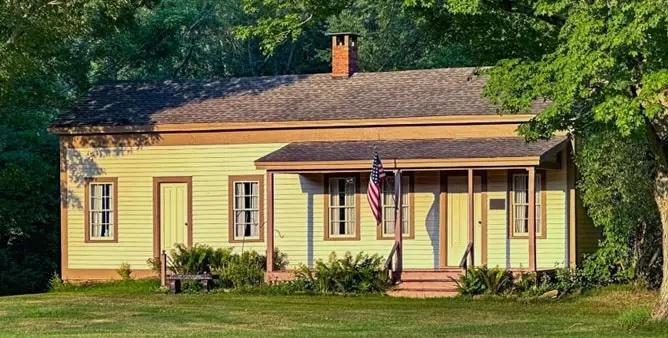
Fifty years ago, on March 26, 1976, the Crook Farm farmhouse was placed on the National Register of Historic Places. It holds the distinction of being the first and the oldest building in both the Bradford area and McKean County to be so designated. This year, the Bradford Landmark Society honors this landmark of American history.
The Crook Farm was purchased in 1974 after the Bradford Landmark Society determined that too little of Bradford’s early history — particularly the rural farm life that existed alongside the oil boom — was being preserved. Founded in 1969, the society had begun searching as early as 1971 for a suitable property on which to establish a living-history site focused on the region’s oil heritage.
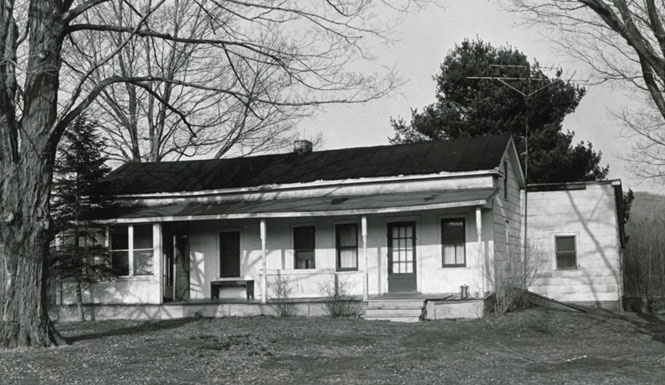
This 1975 photograph of the Crook Farm farmhouse was included in the official nomination form to the U.S. Park Service, which manages the National Register of Historic Places Inventory. The home had been modernized over the years by the Crook family, and extensive interior and exterior restoration was needed to restore the home to its original 1847 appearance.
~ Bradford Landmark Society
Initial plans were to create a complete oil field village, but this plan soon evolved as the Bradford Landmark Society realized the restoration of an old farmhouse and surrounding farm buildings would provide an educational aspect that showcased the life of the area’s early settlers in a unique country setting.
Various potential sites in the area were considered but for various reasons proved unsuitable. It was learned that a small farm in Foster Township, the Crook Farm, seemed promising. An investigation as to its availability began in 1973.
The Crook Farm offered everything the society sought. It had all the requirements: the property had been continuously occupied for four generations of the Crook family who had engaged in farming; the farmhouse, built in 1847, was one of the oldest surviving houses in the area; and the property was the site of Bradford’s first large producing well — the famous Olmsted Well. In addition, invaluable background materials from the family were available, including a detailed diary of Erastus Crook, the original settler, old photographs, personal papers and artifacts. Its location was perfect, too — on the outskirts of Bradford and adjacent to Route 219. The Tunungwant Creek flowed along the rear of the property.
The farm was owned by Genevieve Crook Rapp, a grandchild of the original settlers, Erastus and Betsy Crook. Mrs. Rapp was in a nursing home, but was eager to sell the farmstead to a group that would preserve the history of the house. An agreement was reached, and the Bradford Landmark Society bought the farm in 1974 for $17,000.